
 The bulk structural organization is an essential, intrinsic, and dynamic property of all biological membranes, which plays a fundamental active role in the modulation of membrane protein activity and, therefore, a wide variety of cellular functions. For example, we recently demonstrated such effects of various lipids on the modulation of ligand binding, clustering and signaling activity of ErbB proteins and the activation gating of the voltage-gated KV1.3 ion channel.
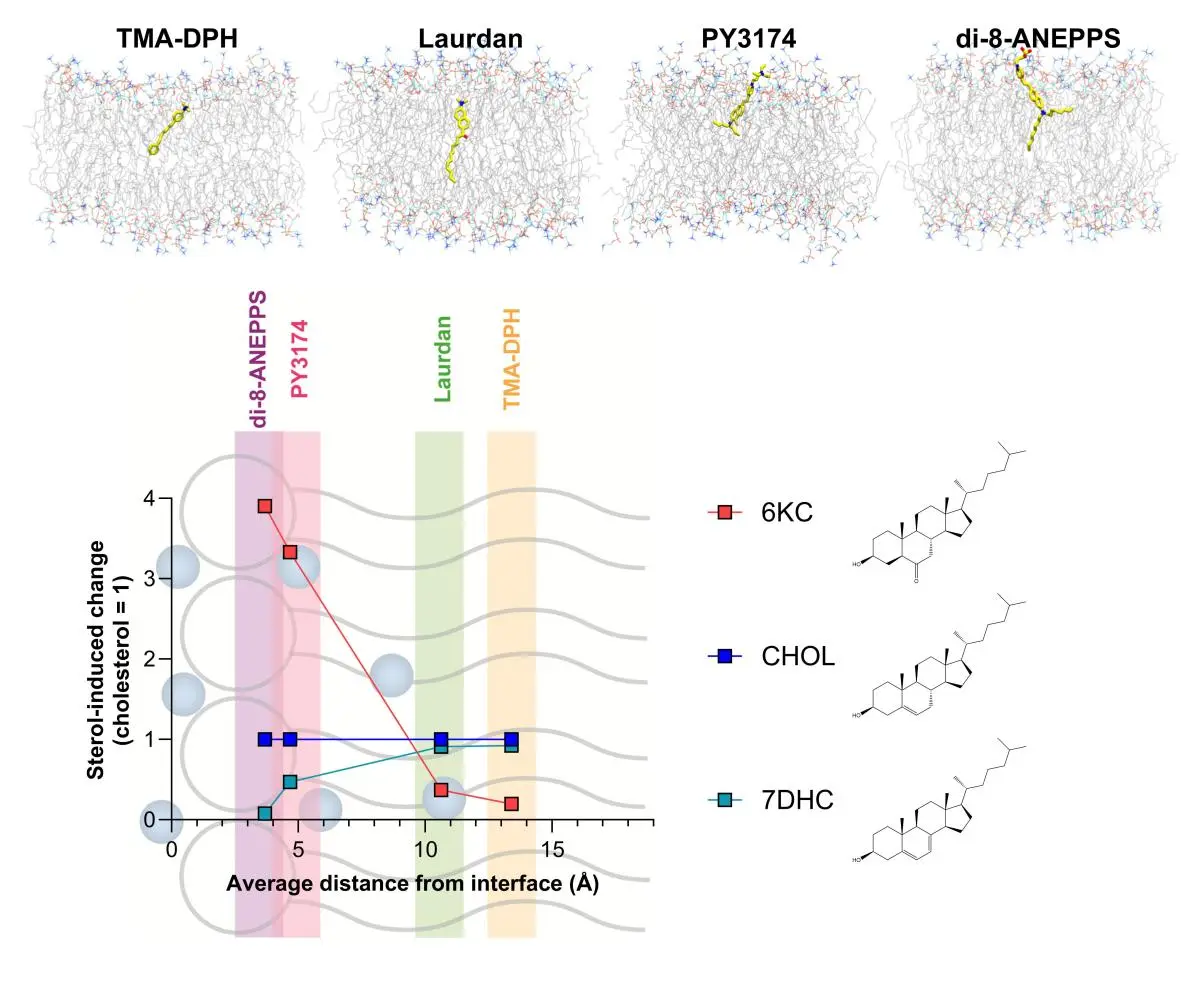
In spite of these, examination of such membrane features is often neglected, which is also partially attributable to the scarcity of experimental methods suitable for the investigation of membrane organization in living cells. Therefore, our research aims to develop and characterize novel, fluorescence- and environment sensitive probe-based approaches for examination of the structural organization of cellular membranes in living cells. Recently, we optimized a high-throughput, flow cytometer-based approach to examine membrane biophysical properties of large quantities of individual cells, developed a confocal microscope-based method suitable for comparative investigation of membranes of various intracellular compartments and performed a detailed comparative and quantitative analysis of the most commonly applied fluorophores in living cells.
We are currently examining the applicability of these techniques to identify pathophysiologically relevant membrane alterations in models of diseases associated with alterations in membrane lipid composition, including malignant tumors, neurodegenerative and lysosomal storage disorders.
Investigation of structural and lateral organization of membranes and their alterations in diseases
Last update:
2026. 09. 11. 14:11