
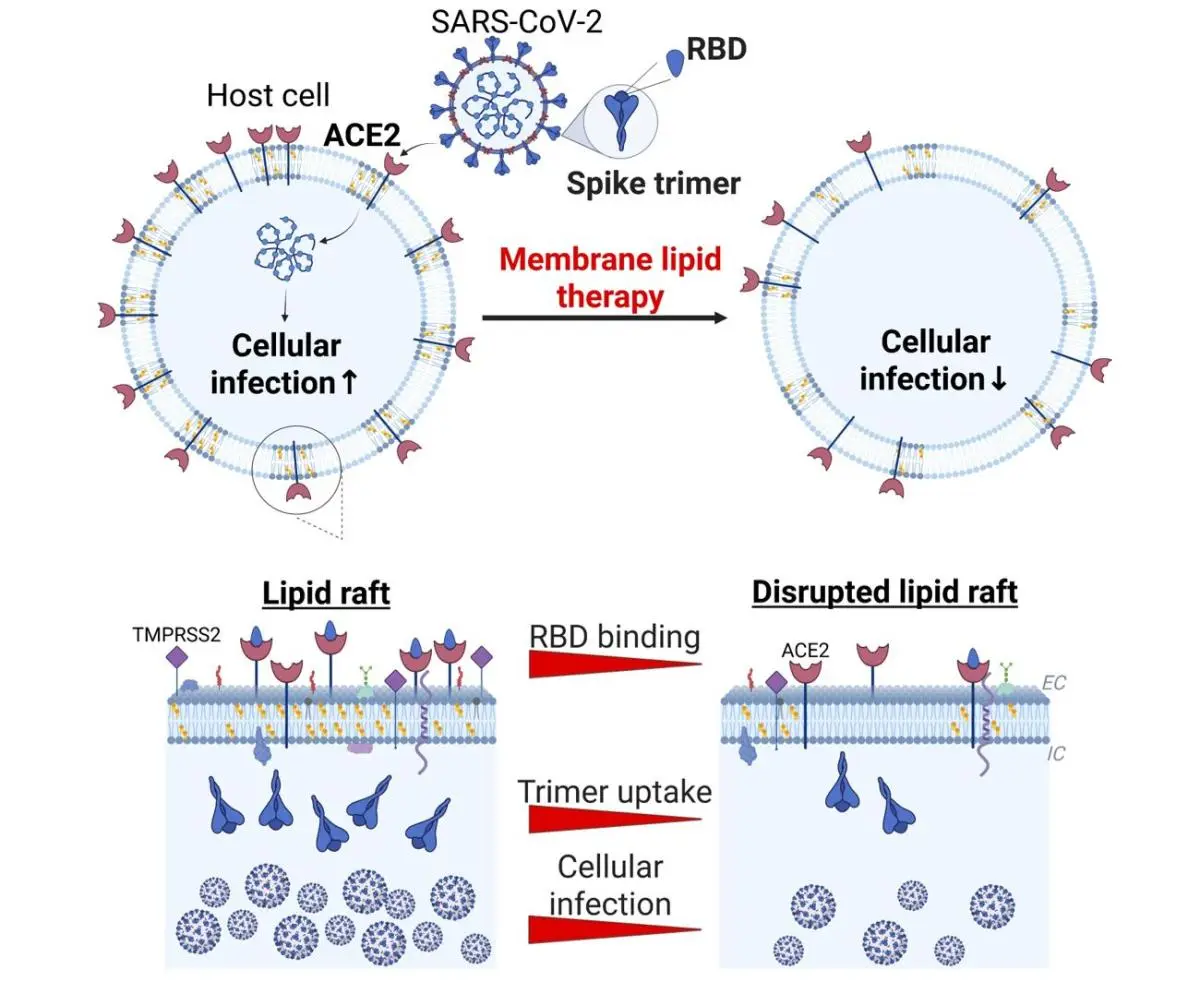
Lipid rafts serve as entry points for many pathogens, including SARS-CoV-2 and Influenza A virus (IAV). Therefore, lipid raft disruption by lowering membrane cholesterol may efficiently inhibit early membrane-coupled steps of infection and represents a novel, broadly applicable preventive and therapeutic strategy. Accordingly, we have demonstrated that cholesterol-depleting and thus lipid raft-disrupting cyclodextrins, including sulfobutylether-cyclodextrin used as vehicle in anti-SARS-CoV-2 Veklury® formulations, effectively inhibit membrane binding and internalization of SARS-CoV-2 spike glycoproteins that are responsible for initiation of cellular infection. However, cholesterol manipulation is more frequently performed with drugs inhibiting cholesterol biosynthesis, such as statins. Although supported by numerous experimental and clinical studies, the therapeutic potential of statins in COVID-19 remains debated. Recently, we found that SH42, a highly specific novel inhibitor of DHCR24, another key enzyme in cholesterol biosynthesis, interferes with spike binding and cellular entry and, consequently, inhibits cellular infection with replication-competent, complete SARS-CoV-2 virions in human lung epithelial cells more efficiently than atorvastatin.
Therefore, we aim to demonstrate that novel membrane lipid therapy approaches are highly promising to combat SARS-CoV-2 and IAV that both utilize lipid raft-dependent cellular entry mechanisms. Furthermore, our goal is to develop novel, nanoparticle-based, targeted membrane lipid therapy compounds to promote clinical translation of our findings, providing a novel prevention and adjuvant therapy approach to mitigate SARS-CoV-2 and IAV infection.